| March | ||
| April | May | |
Tuesday, 12 May 2026
Saturday, 9 May / Thursday 14 May
When autumn arrives I move the various pots of assorted summer bulbs into the basement.
And ignore them. They receive no water and, below grade, infrequently, some artificial light.
Yet somehow they know. these dormant bulbs, that winter is over and it is time to wake up.
 .
.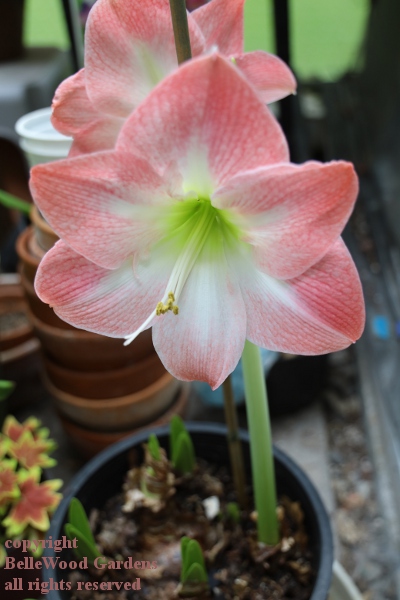
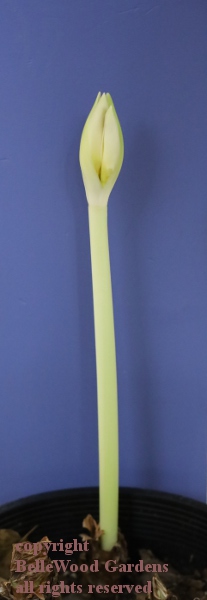
As you can see on the left, on Saturday, 9 May I discovered that this hippeastrum had awakened
and has a pale shoot emerging. Oops. My bad. Should have been paying better attention. Upstairs,
into greenhouse, water well, and on 14 May, just 5 days later, 'Apple Blossom' is beautifully in flower.
Friday, 17 April 2026
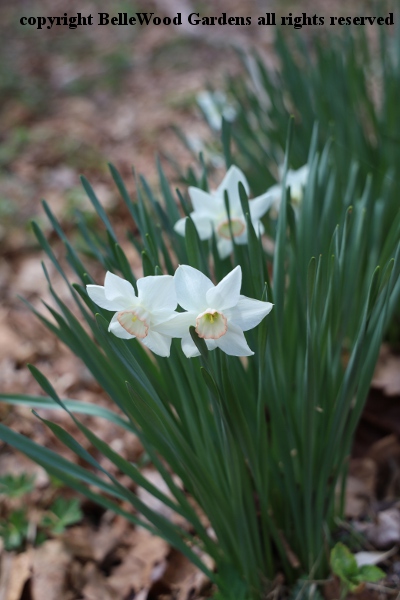
The flowers of Narcissus 'Foundling' seem paler than usual to me.
Might it be a result of the hotter than typical temperatures we've had?
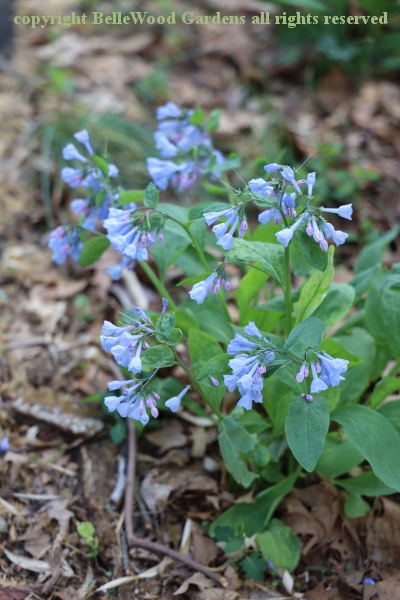
Spreading around, Virginia bluebells, Mertensia virginica, are flowering.
Tuesday, 14 April 2026
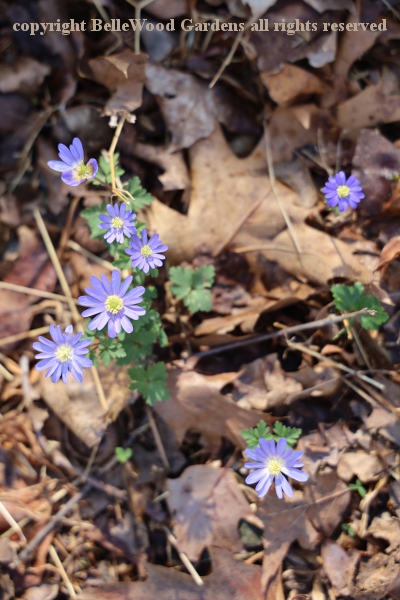
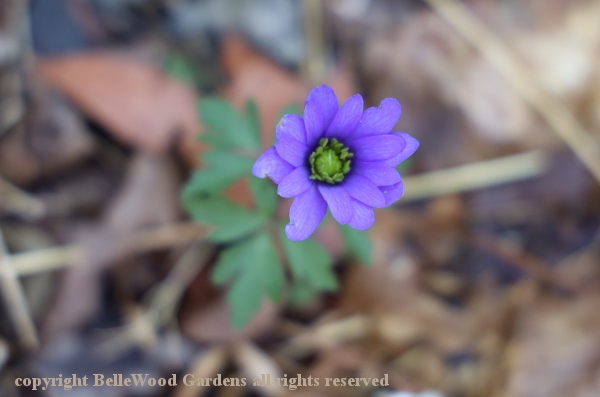
More blue flowers. Anemone blanda has daisy-like flowers. I especially like the blue ones.
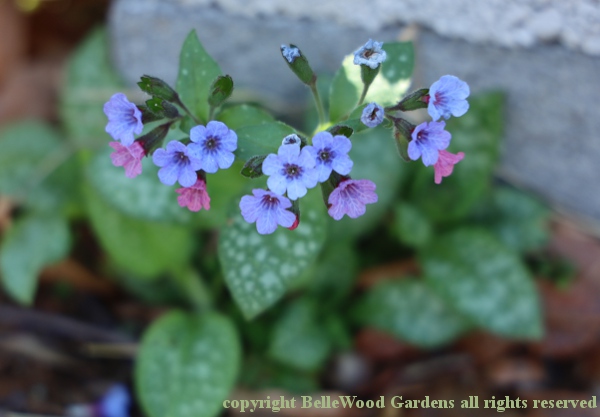
Lungwort, Pulmonaria officinalis, is named for its spotted leaves. The flower buds are
pink when they first start to open, then mature to clear blue, just like Virginia bluebells.
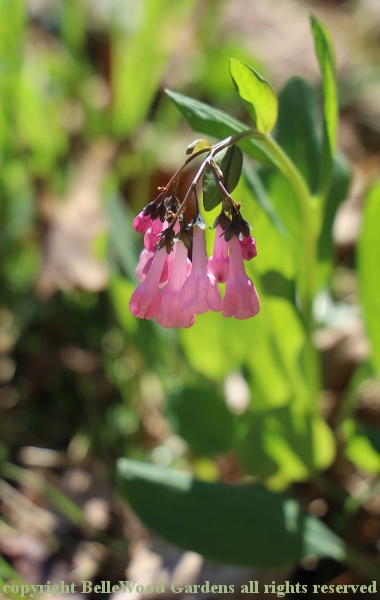
Virginia bluebells, Mertensia virginica, have pink flower buds that mature to soft blue
when fully open. Some never got the memo and remain a lovely clear pink right through.
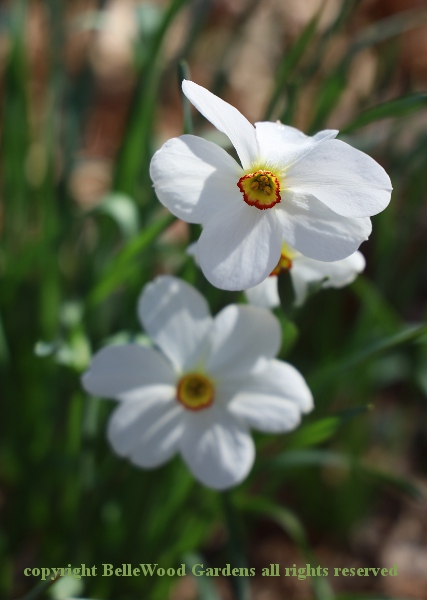
The poet's narcissus or pheasant's eye daffodil, Narcissus poeticus and its cultivars
are very fragrant, later flowering daffodils that I planted when we came here late in
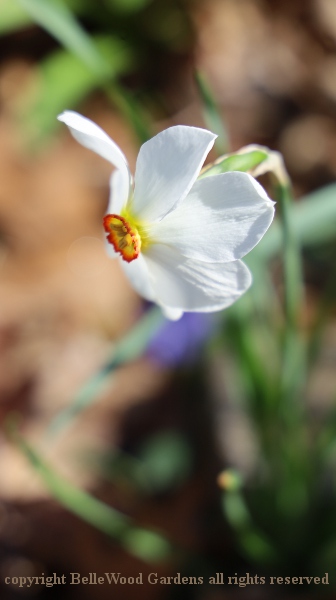
the last century. Sounds impressive, does it not, but I'm referring to the late 1990s.
They were a gift from a friend, and I think of Sally every spring when they are in bloom.
Thursday, 9 April 2026
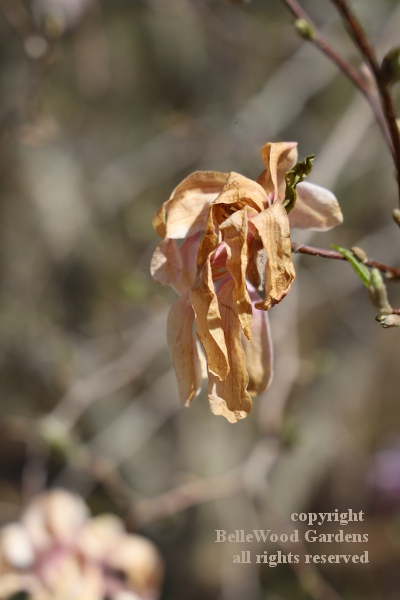
It was a hard frost last night, down to 22.8 degrees Fahrenheit and even the star magnolia's petals were quite damaged.
Wednesday, 1 April 2026
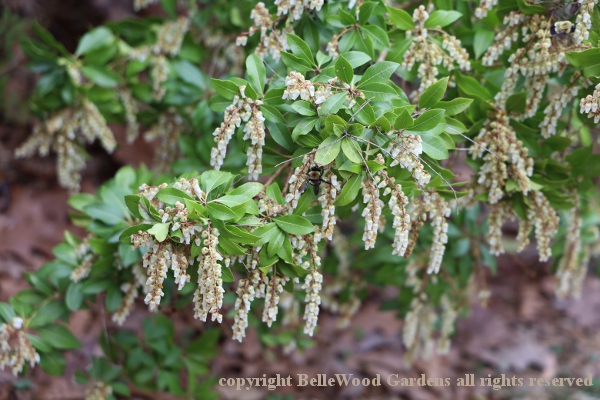
Lily-of-the-valley shrub, Pieris japonica, is in bloom. It is the Japanese "cousin" of
our native species, P. floribunda which has upright racemes of flowers rather than trailing.
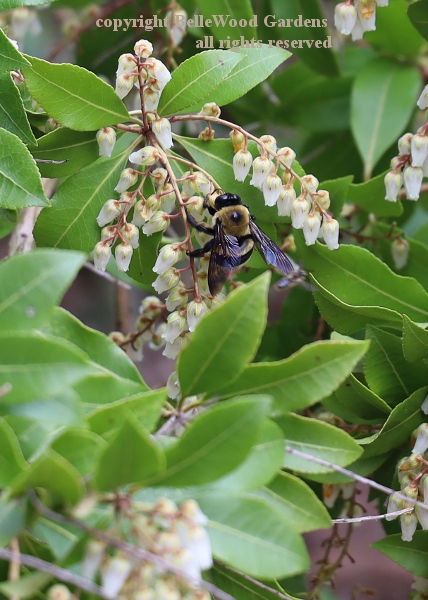
And today the fat bumblebees are busily, assiduously gathering nectar.
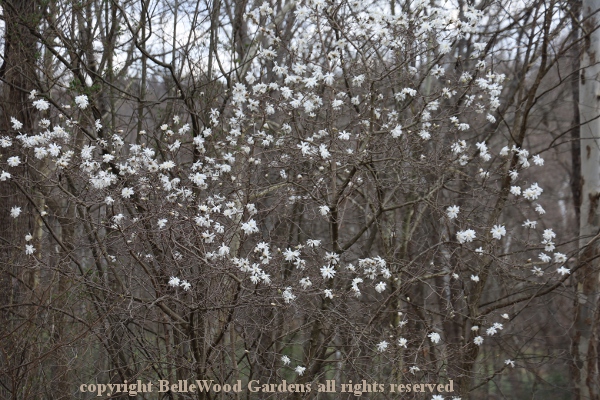
The other star magnolias, Magnolia stellata, are also in flower. This species is earlier
than saucer magnolia, M. soulangeana. And also less susceptible to frost damage.
Tuesday, 31 March 2026
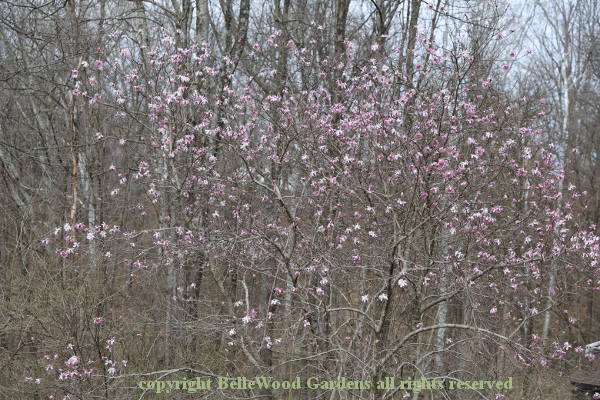
The pink star magnolia, Magnolia stellata 'Rosea' has hurried into bloom, encouraged by temperatures
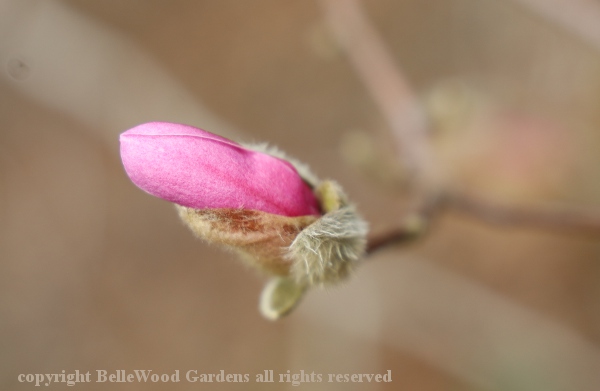
in the very high 70s Fahrenheit. Furry calyces that enclose the tender flower buds swell and open
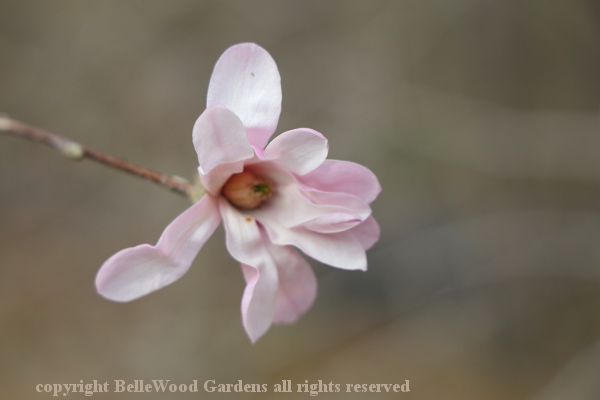
and the crumpled silken petals unfurl around the central stamens, showing paler tints of pink staining ivory.
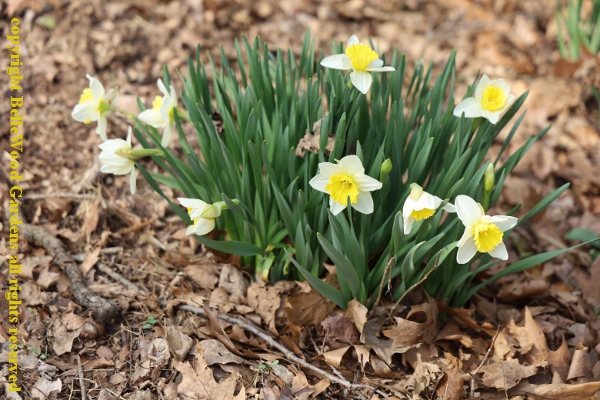
Narcissus 'Ice Follies' has pristine white petals surrounding a bright yellow long cup.
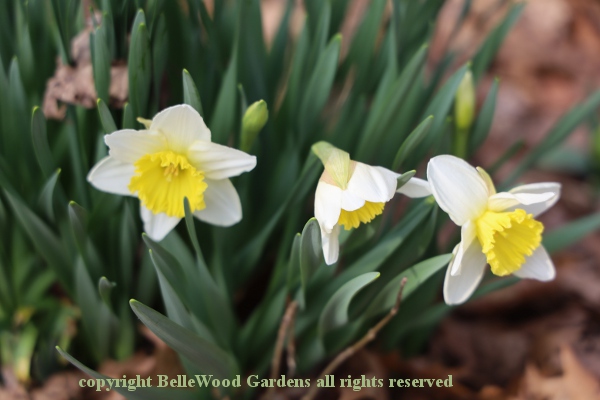
Two tone only for a while, as the cup will fade away from yellow and become ivory, then white.
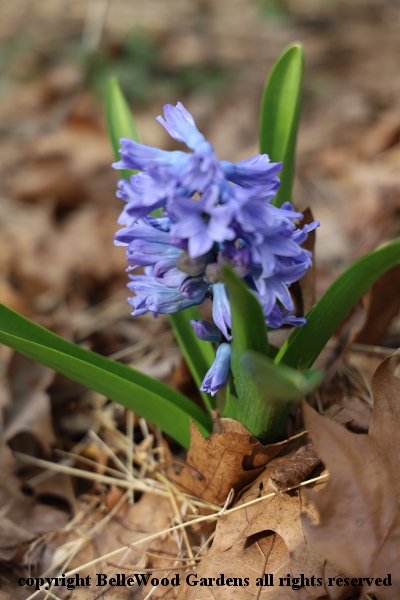
And now there are hyacinths in the garden. In a sheltered site near the house, even in flower.
Monday, 30 March 2026
Sunday, 29 March 2026
Sunday, 22 March 2026
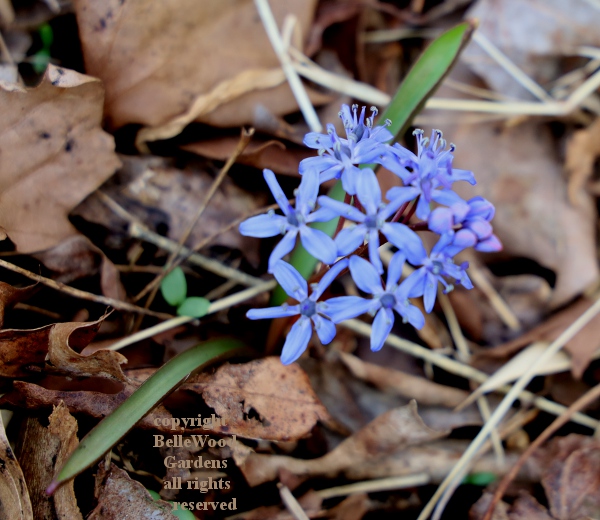
Clear true blue, racemes of starlike flowers of Scilla bifolia spangle here and there across the ground.
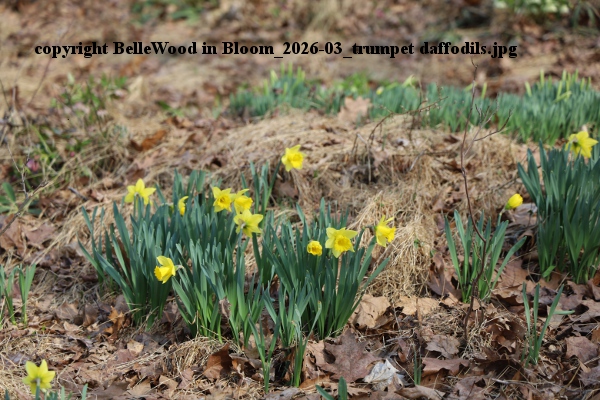
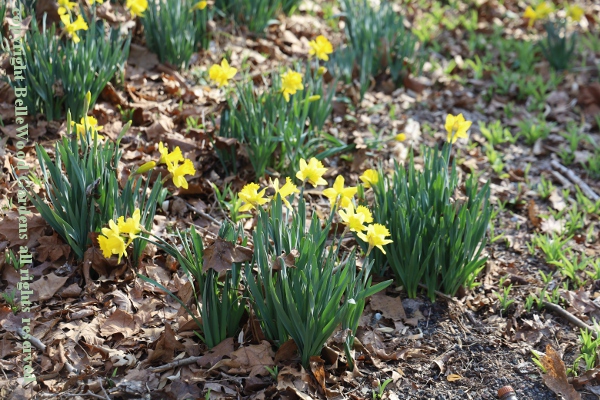
The welcome golden flowers of trumpet daffodils present their sunny flowers to welcome Spring.
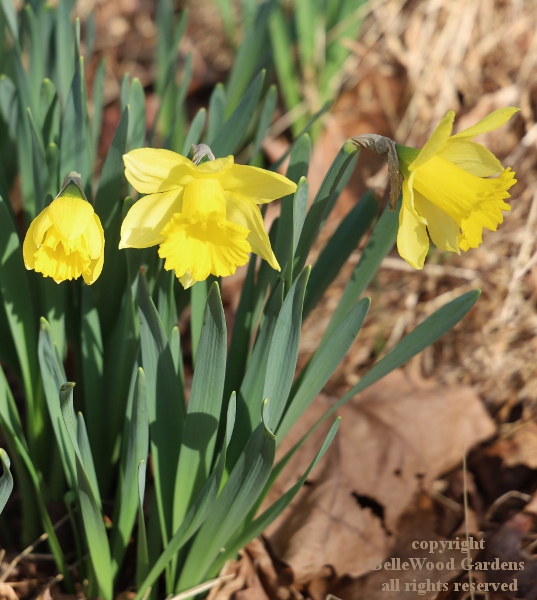
What's not to enjoy: they are hardy, they multiply, neither deer above nor rodents below ground
will trouble them. Delightful in the garden, pleasant as cut flowers too. Make a note to plant more.
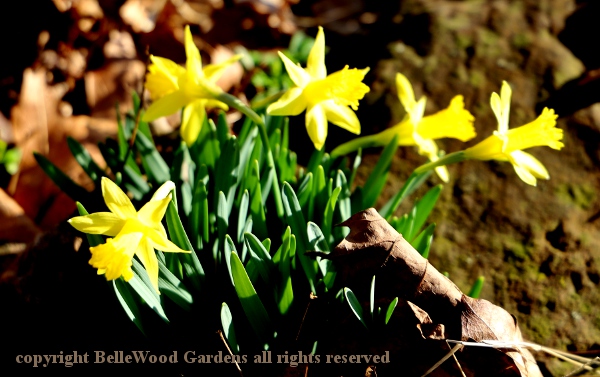
Not all daffodils are stately trumpets. These daintier, more modest size flowers are Narcissus 'Mustard Seed'.
Not all hellebores are the so called Lenten roses, the variable flowers that had their recent festival.
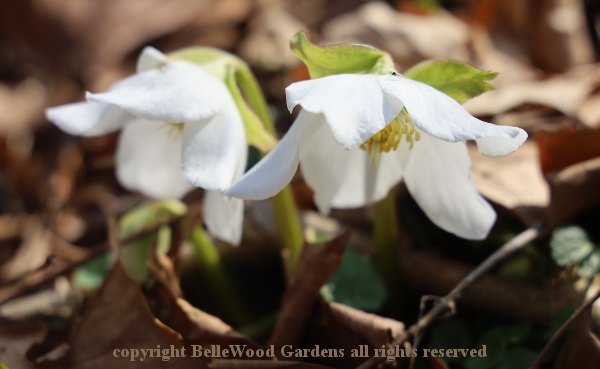
These pristine white flowers are those of Christmas rose, Helleborus niger (not that they flower quite that early.)
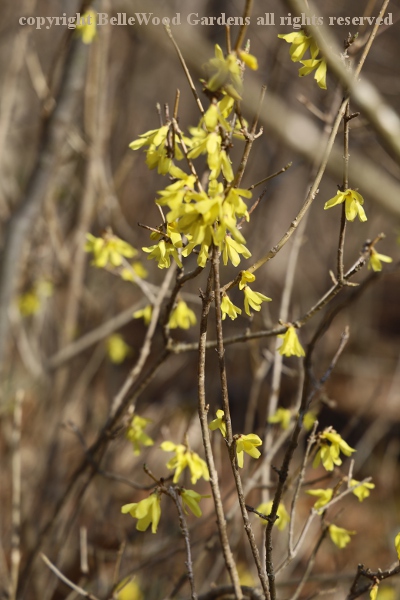
Along with the early bulbs that stored food below ground, to help them into slower while temperatures remain chilly
and the first perennials (and yes, I reference hellebores of several species) the first woody plants open their flowers.
Monday, 16 March 2026
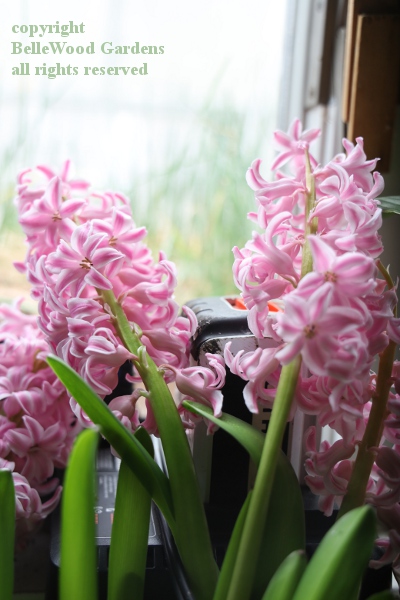
Last fall I bought a package of hyacinth bulbs at Costco, 10 pink and 10 blue.
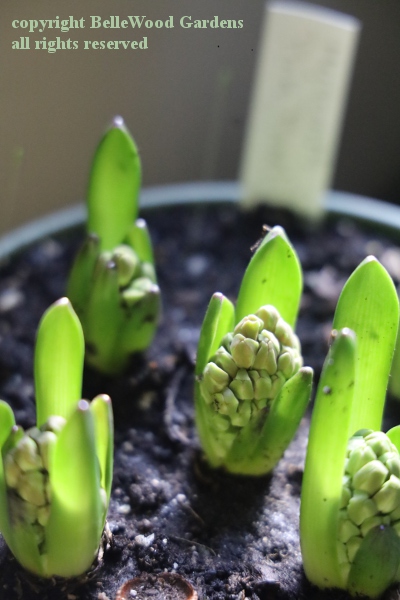
Potted them up, five to a pot, and left them in the garage next to the window
into greenhouse. There they sat. Until in February I noticed these signs of life.
 .
.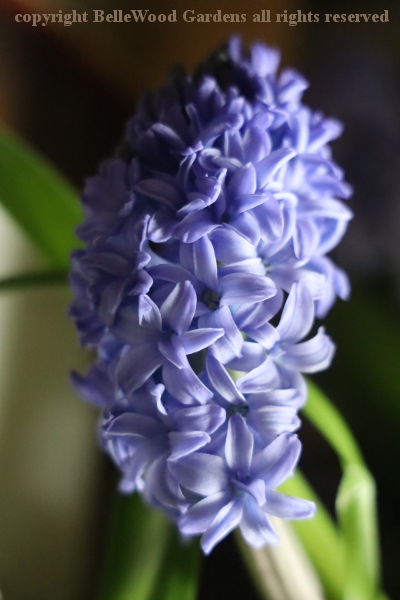
Now it is mid-March and they are in flower. Their fragrance is noticeable as soon as I enter the garage.
Friday, 13 March 2026
Notice something different about these snowdrops? Look at their leaves.
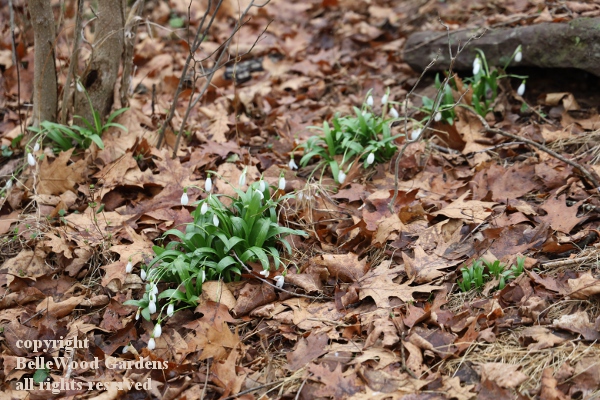
Most species and their cultivars have gray-green leaves. These, however, have bright green leaves.
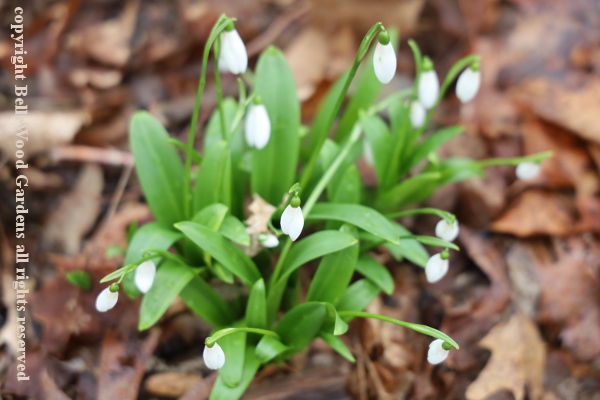
That helps to identify them as Galanthus woronowii. Unless they might be G. ikariae or G. latifolius.
I should go outside, tip up a flower and see what the green markings on the inner tepal look like. And
if there is a notch at the tepal's edge, it would distinguish them as G. latifolius. Stay tuned for updates.
Thursday, 12 March 2026
There have been a couple of respectable snowfalls of 7 to 10 inches. There have been bitter cold temperatures, single digits. Then there was - no other way to name it - with summery temperatures of 79 / 81 degrees Fahrenheit. Snow melted, except for hills created where snow was shoved by snow plow. And the little bulbs that have been dreaming away underground have heaved themselves up, out, and into bloom.
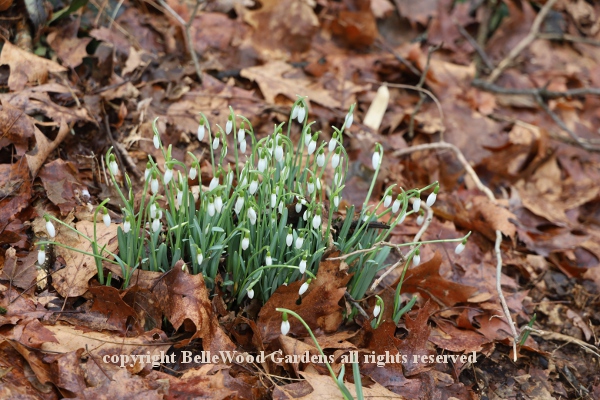
You can tell the affection with which a flower is held by the diversity and variety of names with which it is gifted. For example, consider snowdrops. Commonly associated with earliest flowering while snow still carpets the ground. Let us begin with its Latin name: starting with genus, Galanthus, from the Greek gala, meaning milk and anthos meaning flower. Species name for what is perhaps the most common species: nivalis means of the snow.
Common names include harbingers of spring, fair maids of February, Candlemas bells. Their German name of schneeglöckchen, snow bells. Schneetropfen is sometimes used instead, referring to them as snow-piercers.
Golden buttercup-like flowers of winter aconite, Eranthis hiemalis
spangle through the brown quilt of last autumn's fallen leaves.
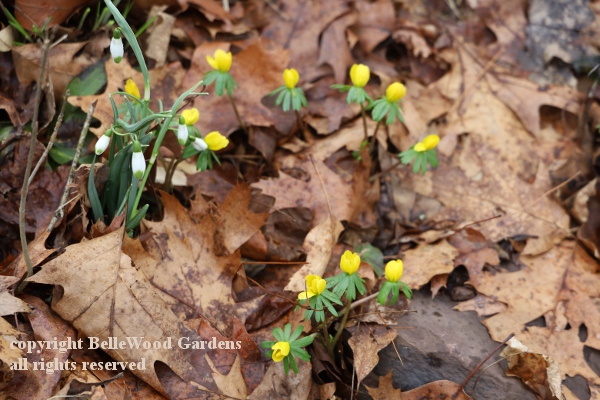
Look closely at the snowdrops. See the flick of green decorating the petals?
Indeed, these are Galanthus viridi-apice, the green tipped snowdrop.
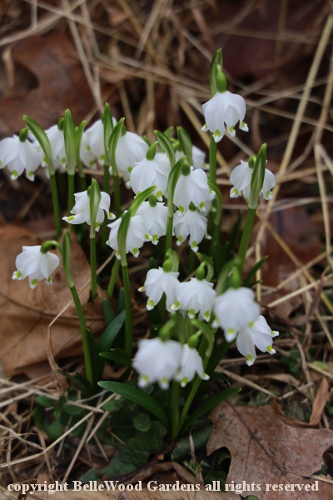
These are not Galanthus, snowdrops but instead are Leucojum vernum, spring snowflake.survivability
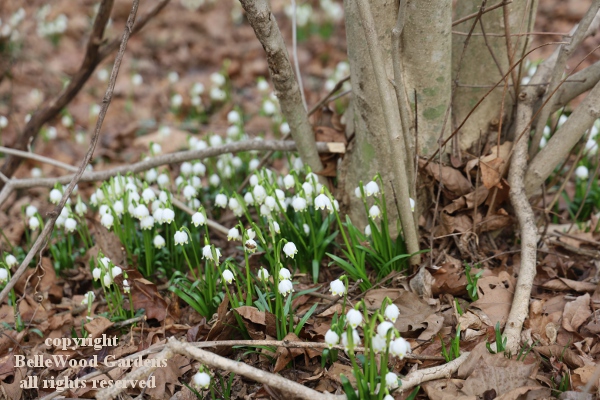
Rather than the three helicopter-like petals of snowdrops, snowflakes more resemble a starched petticoat.
 .
.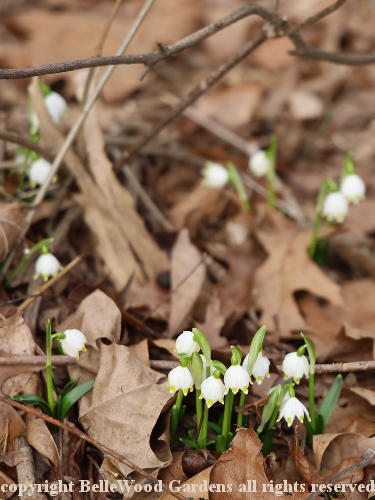
Like galanthus, leucojum is happy in woodland settings and prefers places that retain some moisture but not soggy.
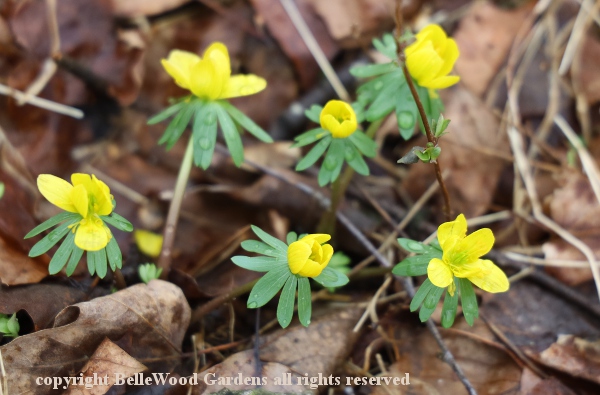
Winter aconite grow from little tubers, so small that drying them for shipment from nursery to
point-of-sale often dries them out beyond survivability. Purchase 25 and if five grow and flower
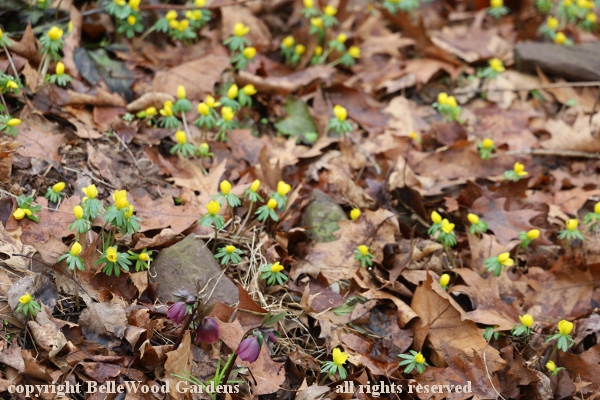
that's what you can expect. However, once those few flower and set their seed (which look like
little brown BBs) they'll quickly establish, multiply, spread . . . and reward your patience.
As well as little early bulbs (I use the term as a generic, actually referencing true bulbs, corms, tubers,
all those underground food storage methods plants have developed) the first true perennials begin to bloom too.
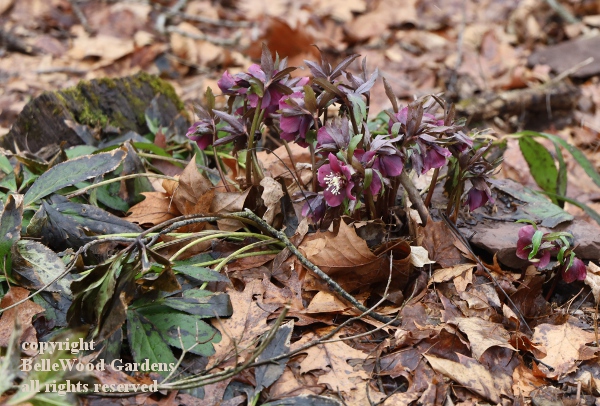
Hellebores. I am especially fond of Helleborus Early Purple Group, with their rich burgundy purple flowers
accented with ivory white stamens. Their leaves may be showing winter damage but the flowers are pristine.
Springtime delights as time changes and the little bulbs arise and flower in the garden.